

Alpbach 2019: 22 European education agencies work on the future of Erasmus+
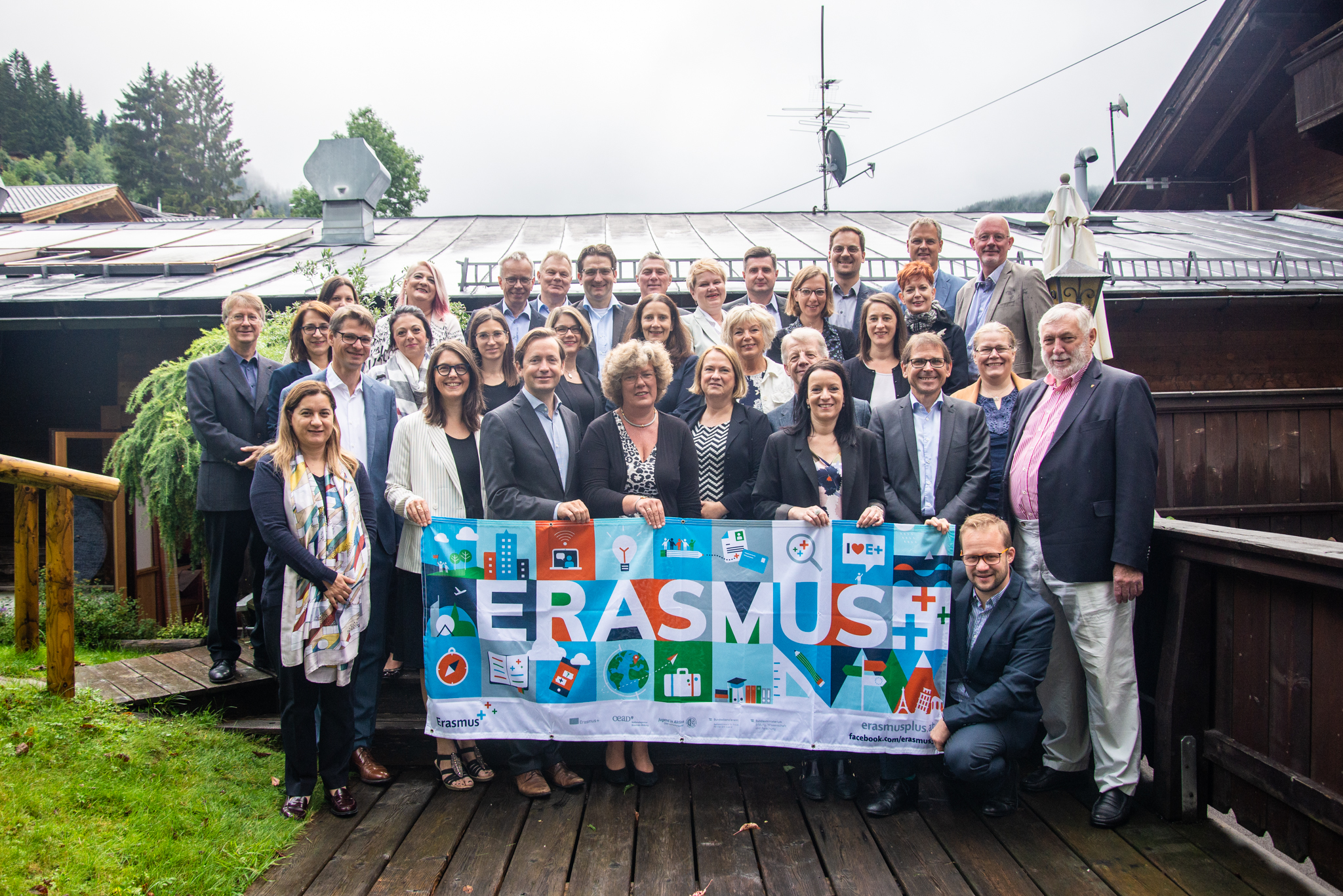
The EU's Erasmus+ programme and its predecessor programmes have enabled more than ten million people educational stays abroad since 1987. This includes more than a quarter of a million Austrians who have studied, taught, carried out research or completed an internship abroad since Austria joined the programme in 1992. The European Commission invested more than € 14.7 billion in Erasmus+ 2014–2020 with the aim of enabling four million Europeans to spend an educational stay abroad and cooperate in transnational projects. According to European Commission’s Director Sophia Eriksson-Waterschoot, its successor, which starts in 2021, will have a doubled budget (€ 30 billion) to enable educational stays abroad for twelve million people and increase the number of cooperation projects. The European Parliament is planning to triple the funding for Erasmus+ 2021–2027.
Easier and more inclusive access for even more participants
Preparations are in full swing. Access to the programme is to be made easier and more user-friendly. The new generation of the programme also aims to increase the mobility of pupils and apprentices and to strengthen the participation of smaller institutions.
Greater attention will be paid to social equality. As a first step the Austrian Federal Ministry of Education, Science and Research has already increased Erasmus+ grants for students for the academic year 2019/20. This means that Erasmus+ grants for all students in Austria will increase by € 60. Depending on the destination country and whether it is a study visit or an internship, the increase is 12 to 20 per cent.
Erasmus+ is implemented in Austria by the OeAD. Jakob Calice, managing director of the OeAD, says: ‘Students receiving study grants in Austria can look forward to another treat: in addition to the grant for studying abroad they will now also receive the full Erasmus+ grant on the initiative of the Austrian Federal Ministry of Education, Science and Research. Until now there was only a compensation payment, a kind of cap.’ This group of students, which makes up 16 to 17 per cent of Erasmus students, will thus have a sustainable increase in funding for their Erasmus+ stays abroad.
High-ranking EU representatives at the discussions
Erasmus+ will continue to cover the areas of education, youth and sport as of 2021. At the invitation of the OeAD representatives from 22 Erasmus+ national agencies in the field of education worked with Sophia Eriksson-Waterschoot (European Commission, Director for Education and Culture), Petra Kammerevert (European Parliament, member of the Committee for Culture and Education) and Johanna Koponen (Finnish EU Presidency) on the future of Erasmus+. The focus was on inclusion, broader access to Erasmus+, flexibility of the programme and consistency over the seven programme years. New aspects such as virtual mobility, learners in adult education, pupil mobility and the budget were also discussed.
Johanna Koponen (representative of the Finnish Presidency)
Erasmus+ is one of the European Union's most important initiatives: according to Eurobarometer European Union citizens consider exchange programmes such as Erasmus to be one of the three most important initiatives of all, right after freedom of movement and peace-making. We see this as a mandate to quickly finalise preparations for a new programme starting in 2021. The Finnish Presidency is proud of what we have achieved with Erasmus+ so far. The discussions in Alpbach are an important step towards successfully getting the new measures off the ground.
Sophia Eriksson-Waterschoot (European Commission, Director for Education and Culture)
We are working on a strengthened, inclusive and forward-looking new Erasmus+ programme. It will be key to the implementation of the vision of the European Education Area that the European Union wants to achieve by 2025. The aim is to promote, support and facilitate mobility and transnational cooperation. The European Education Area is to help us modernise and improve our education systems. The Alpbach workshop was a useful platform for discussing the next steps with the national agencies of the member countries and preparing for a smooth transition to the new programme starting in 2021.
Petra Kammerevert (European Parliament, member of the Committee for Culture and Education)
Time and again all sides emphasise the great importance of the Erasmus+ programme for social cohesion and intercultural understanding in Europe. The budget for the new programme generation is to finally reflect this importance. The motto is: don't just talk, be ready to open your purse. For a truly effective and inclusive funding programme we need at least a threefold increase in funding in the medium term compared to the current funding period.
Jakob Calice (managing director of the OeAD)
Demand for participation in Erasmus+ is steadily increasing – both for educational stays abroad and for project applications from educational institutions. Austria is making full use of European funds, and yet we are still unable to meet the demand in full. We therefore consider a significant increase in funding for the new programme to be necessary. It is particularly important to us that access to the programme becomes easier still and that everyone who wants to go abroad is able to do so.